


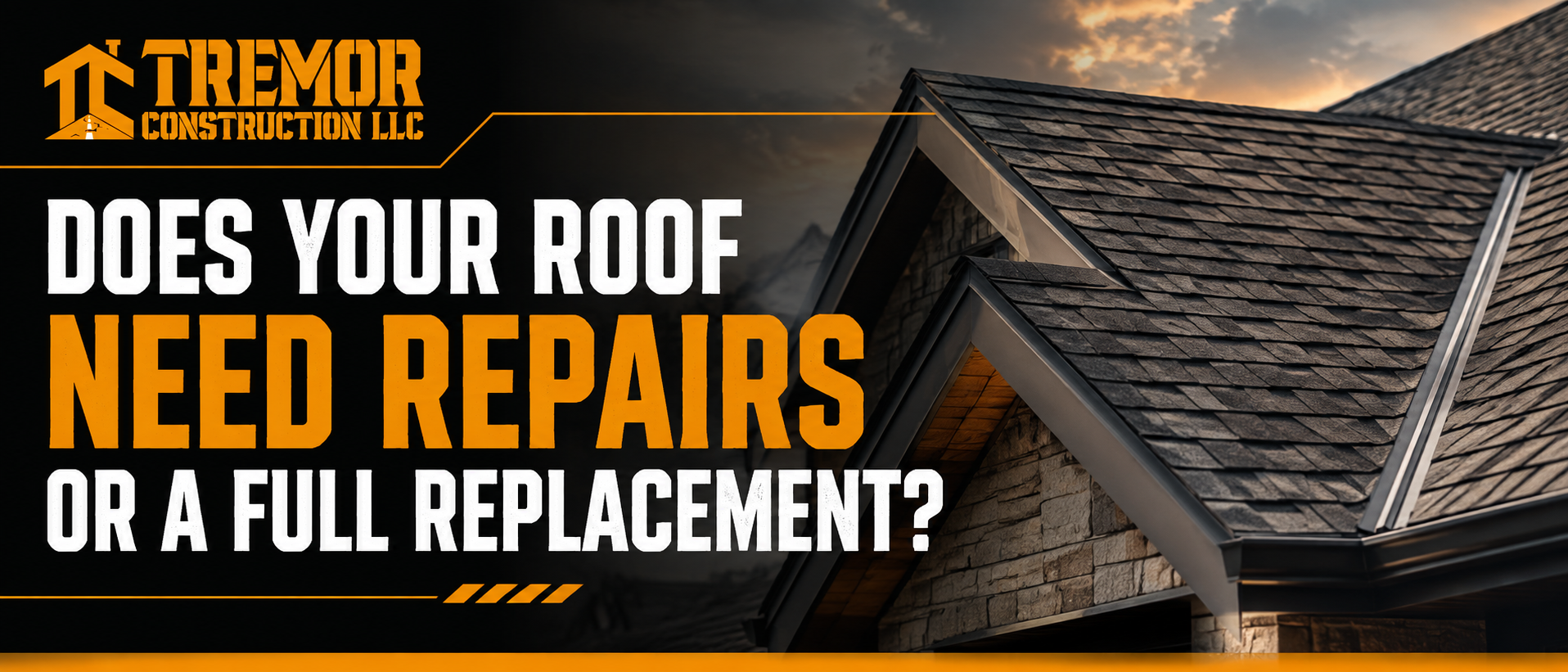
Roof Repair vs. Roof Replacement: How to Know Which One You Need
Your roof is one of the most important parts of your home. It protects your property from rain, wind, snow, heat, and other elements throughout the year. But when you notice missing shingles, leaks, or visible damage, one of the biggest questions is: Do you need a roof repair, or is it time for a full roof replacement?
The right answer depends on the age of your roof, the extent of the damage, and its overall condition.
When Roof Repair May Be Enough
A roof repair is often the best option when the damage is limited to a small area and the rest of the roof is still in good condition.
You may only need a repair if you have:
- A few missing or damaged shingles
- A small leak in one specific area
- Minor flashing damage around vents, chimneys, or skylights
- Damage caused by a recent storm
- A roof that is still relatively young and otherwise performing well
Repairing these problems early can help prevent water from reaching the roof decking, insulation, ceilings, and walls.
However, repairing one section does not always solve the underlying problem. If leaks or damage continue appearing in different areas, the roof may be approaching the end of its useful life.
Signs You May Need a Roof Replacement
A roof replacement becomes more practical when damage is widespread or the roofing system has significantly deteriorated.
Some common warning signs include:
Your Roof Is Getting Older
The expected lifespan of a roof varies depending on the roofing material, installation quality, weather exposure, and maintenance. As a roof ages, shingles and other components gradually become less effective at protecting the structure underneath.
If an older roof is beginning to require frequent repairs, replacing it may make more financial sense than continuing to fix individual problems.
You Have Multiple or Recurring Leaks
One small leak may be repairable. Several leaks throughout the home can indicate a larger roofing problem.
Water may travel underneath roofing materials before becoming visible inside the house, which means the area where you notice the leak is not always where the problem started.
Large Areas of Shingles Are Damaged
Missing, cracked, curling, loose, or deteriorating shingles across multiple sections of the roof can be a sign that repairs alone will not provide a long-term solution.
The Roof Decking Is Damaged
Moisture that gets underneath roofing materials can eventually damage the wood decking supporting the roof. Soft areas, sagging sections, or significant water damage should be inspected as soon as possible.
Repairs Are Becoming Too Frequent
Occasional roof maintenance is normal. But if you are paying for repairs every year—or every few months—the combined cost can quickly add up.
At that point, investing in a new roof may provide better long-term value.
Consider the Extent of the Damage
The amount of damage is one of the biggest factors when choosing between repair and replacement.
If a windstorm damages a small section of an otherwise healthy roof, repairing that section may be all that is necessary.
On the other hand, if severe weather affects multiple areas or exposes underlying roofing materials, a more extensive solution may be needed.
This is why a professional roof inspection is important. Some damage can be difficult to see from the ground.
Think About Long-Term Cost
Roof repairs usually cost less upfront than a replacement, which makes them attractive for smaller problems.
But the cheapest option today is not always the cheapest option long term.
Imagine repairing several sections of an aging roof only to discover another leak six months later. Repeated service calls and repairs can eventually approach the cost of replacing the roof.
A replacement requires a larger initial investment, but it provides an entirely new roofing system and can reduce the need for frequent repairs.
Don’t Wait Until a Small Problem Gets Worse
Roof problems rarely improve on their own.
A damaged or missing shingle can allow moisture underneath the roofing system. Over time, that moisture can contribute to damaged decking, insulation, ceilings, drywall, and other parts of the home.
Addressing roofing problems early usually gives you more options and can help prevent more expensive damage.
Repair or Replace? Start With a Professional Inspection
Every roof is different. Two homes with similar-looking damage may require completely different solutions depending on the roof’s age, installation, materials, ventilation, and underlying condition.
A professional roofing inspection can help determine whether the problem is isolated or whether it is part of a larger issue.
If your roof is leaking, showing signs of damage, or simply getting older, don’t wait until the problem becomes more expensive. Schedule a roof inspection and find out whether a repair or replacement is the right solution for your property.